

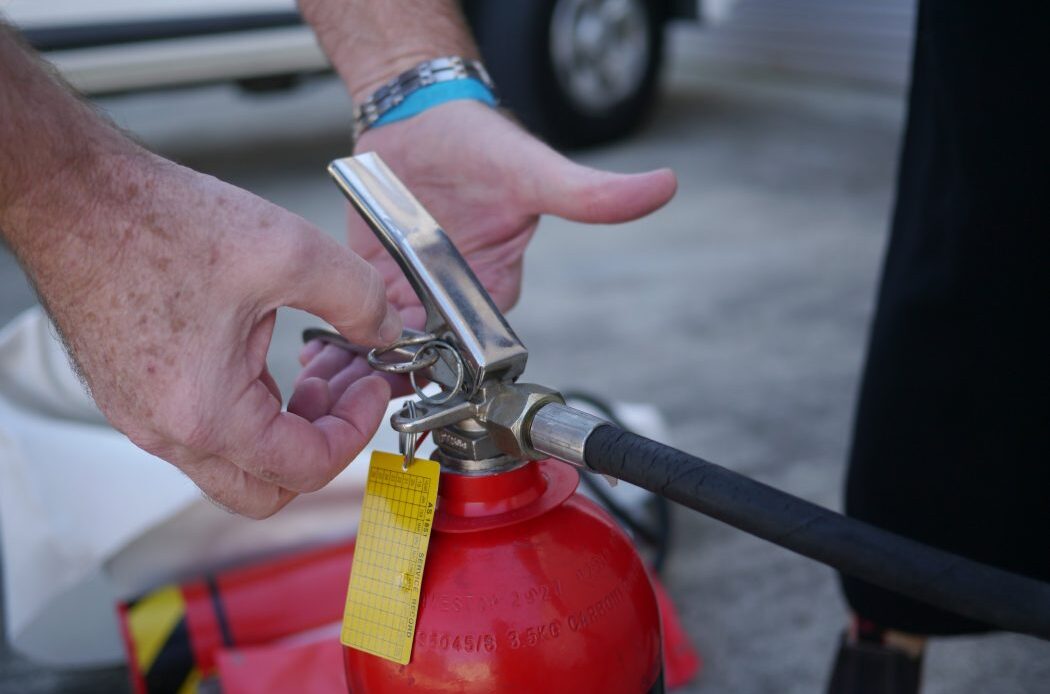
Fire extinguisher training Melbourne helps employees understand how to respond to small workplace fires, identify suitable firefighting equipment and recognise when evacuation is the safest option.
When a fire starts at work, employees may have only a short time to assess the situation. Without appropriate training, they may be unsure which extinguisher to use, how to operate it or whether attempting to control the fire is safe.
Workplace fire extinguisher training addresses these uncertainties through instruction on fire hazards, equipment selection, emergency procedures and practical firefighting techniques.
Australian Fire Protection (AustFirePro) provides fire extinguisher and first response training covering fire classifications, extinguisher types and practical equipment operation.
For Melbourne employers, understanding what employees can expect from training helps when selecting a suitable course and preparing staff for workplace emergencies.
What Is Fire Extinguisher Training?
Fire extinguisher training teaches employees how to identify common fire hazards, select appropriate firefighting equipment and understand the limits of first response firefighting.
Training generally combines theoretical instruction with practical activities, allowing participants to become familiar with portable extinguishers and the procedures involved in using them safely.
AustFirePro’s Fire Extinguisher Training covers key first response topics, including fire classifications, equipment selection, safe operating procedures and practical extinguisher use.
Employees also learn about the importance of raising the alarm, following emergency procedures and maintaining a safe evacuation route.
The purpose of training is to help employees make informed decisions during small fire emergencies while understanding when professional emergency response is necessary.
What Employees Can Expect During Fire Extinguisher Training
Fire extinguisher training Melbourne includes several learning components designed to familiarise employees with workplace firefighting equipment and safe emergency response procedures.
AustFirePro’s published first response training information outlines theoretical and practical activities that introduce participants to fire behaviour, equipment operation and associated safety precautions.
1. Understanding Fire Hazards and Fire Classes
Employees begin by learning how fires develop and why different burning materials require different firefighting methods.
Training introduces the fire triangle, which explains the three elements required for combustion:
- Heat: The energy needed to start and sustain combustion.
- Fuel: The combustible material involved in a fire.
- Oxygen: The element that supports combustion.
Understanding these elements helps employees recognise how firefighting equipment works.
Participants also learn about fire classifications, including fires involving ordinary combustible materials, flammable liquids and cooking oils.
Recognising different fire classes is necessary because certain extinguishing agents may be ineffective or dangerous when used on unsuitable fires.
2. Identifying Different Types of Fire Extinguishers
Workplaces may contain different portable fire extinguishers depending on their equipment, activities and fire hazards.
During fire equipment training, employees learn to identify extinguisher types and understand their intended applications.
| Fire Extinguisher Type | Typical Application |
| Water | Class A fires involving ordinary combustible materials |
| Foam | Certain Class A and Class B fires, depending on the extinguisher’s rating |
| Carbon dioxide (CO₂) | Certain flammable liquid fires and fires involving electrical equipment |
| Dry chemical powder | Fire classes specified on the extinguisher’s label |
| Wet chemical | Cooking oil and fat fires where appropriately rated |
Employees should always check an extinguisher’s classification, operating instructions and suitability before considering its use.
The Country Fire Authority (CFA) advises that no single extinguisher type is suitable for every fire.
This makes correct equipment selection an essential part of workplace extinguisher training.
3. Learning How to Operate a Fire Extinguisher
One of the main objectives of fire extinguisher training Melbourne is helping employees understand how to operate portable firefighting equipment safely.
Training commonly introduces the PASS method, a four-step technique used with many portable extinguishers.
- Pull: Remove the safety pin to prepare the extinguisher for operation.
- Aim: Direct the nozzle towards the base of the fire.
- Squeeze: Operate the handle to release the extinguishing agent.
- Sweep: Move the nozzle from side to side across the base of the fire.
Employees learn how these actions relate to the type of extinguisher and the fire conditions.
They also need to understand safe positioning, maintaining an escape route and recognising whether the fire is small enough to address safely.
Using an extinguisher should only be considered when the fire is small and manageable, suitable equipment is available and the person can operate it safely.
If the fire spreads, smoke creates hazardous conditions or the employee is uncertain about the situation, evacuation must take priority.
4. Participating in Practical Firefighting Exercises
Practical exercises allow employees to apply the techniques discussed during training.
AustFirePro’s published first response training outline includes using an extinguisher to put out a controlled fire safely.
During supervised exercises, participants can become familiar with extinguisher handling, operating positions and extinguishing techniques.
Practical training may help employees understand the physical actions involved in operating equipment and the importance of following instructions.
All exercises should take place under controlled conditions with appropriate supervision and safety procedures.
Employers should confirm the practical activities included in their selected course before making a booking.
5. Understanding Fire Blankets and Fire Hose Reels
Fire extinguishers are one part of the firefighting equipment that employees may encounter at work.
AustFirePro’s published first response training content also includes fire blankets and fire hose reels.
Instruction on this equipment helps participants understand its intended use, associated safety precautions and relevant operating considerations.
This knowledge may be particularly applicable to workplaces with commercial kitchens, maintenance activities or facilities containing several types of firefighting equipment.
Employers should confirm which equipment is covered in their selected training program.
6. Recognising When to Evacuate
Knowing when to leave a fire emergency is a critical component of workplace fire safety.
Employees should understand that attempting to extinguish a fire is only appropriate when conditions are safe and the fire can be managed within the limits of their training.
Evacuation should take priority when:
- A fire is spreading or becoming difficult to control.
- Smoke, heat or hazardous conditions threaten occupants.
- Suitable firefighting equipment is unavailable.
- An employee is uncertain about the equipment or situation.
- An escape route could become obstructed.
- Workplace emergency procedures require evacuation.
Employees should raise the alarm, follow evacuation instructions and move to a safe location.
Emergency services can be contacted by calling Triple Zero (000).
Effective training reinforces these decisions so employees understand both the capabilities and limitations of portable firefighting equipment.
Who Should Attend Workplace Fire Extinguisher Training?
Fire extinguisher training Melbourne may be suitable for employees across various industries where portable firefighting equipment forms part of the workplace’s emergency arrangements.
Potential participants include:
- Office employees: To understand basic fire hazards, equipment locations and emergency procedures.
- Warehouse workers: To become familiar with firefighting equipment relevant to their working environment.
- Retail and hospitality staff: To understand equipment use and evacuation responsibilities in customer-facing workplaces.
- Maintenance personnel: To recognise fire hazards associated with equipment and maintenance activities.
- Facility management teams: To support awareness of firefighting equipment and building emergency arrangements.
- Fire wardens and safety officers: To complement their understanding of first response procedures.
The CFA recommends fire extinguisher training for staff, including those without designated fire warden responsibilities.
Employers should determine appropriate training based on workplace fire risks, employee responsibilities and emergency procedures.
How Does Fire Extinguisher Training Support Workplace Safety?
Fire extinguisher training Melbourne supports workplace emergency preparedness by helping employees understand the equipment and procedures relevant to their working environment.
Employees need clear instructions about what to do when a fire is discovered, including how to raise the alarm, notify others and follow evacuation arrangements.
Practical instruction can help employees become more familiar with extinguisher operation and the precautions associated with first response firefighting.
For employers, workplace extinguisher training can support several objectives:
- Improving employees’ understanding of available firefighting equipment.
- Helping staff recognise common workplace fire hazards.
- Reinforcing emergency alarm and evacuation procedures.
- Supporting safer decisions during small fire emergencies.
- Increasing familiarity with equipment selection and operating techniques.
- Contributing to broader workplace emergency preparedness.
WorkSafe Victoria provides guidance on employer responsibilities for workplace health and safety, including providing employees with appropriate information, instruction and training.
Employers should assess their specific workplace hazards and applicable Victorian occupational health and safety requirements when planning fire safety instruction.
How Long Does Fire Extinguisher Training Take?
The duration of fire extinguisher training Melbourne depends on the course content, delivery arrangements and number of participants.
AustFirePro’s published fire extinguisher training information describes sessions lasting approximately 1 to 1.5 hours, with up to 25 participants per class.
These figures provide a general indication of its published training format. Employers should confirm the duration and participant limits applicable to their particular booking.
Additional training may be necessary where employees have broader emergency responsibilities, such as coordinating evacuations or acting as fire wardens.
For organisations planning staff training, confirming the session format in advance can assist with scheduling and workforce arrangements.
How Often Should Employees Complete Fire Extinguisher Training?
The appropriate frequency of workplace fire extinguisher training depends on applicable legal requirements, workplace hazards and employee responsibilities.
Employers in Victoria should review their occupational health and safety duties when determining initial training and refresher requirements.
Further instruction may be appropriate when:
- Workplace fire hazards change.
- New firefighting equipment is installed.
- Employees take on different emergency responsibilities.
- Emergency procedures are updated.
- Staff require additional instruction or practical experience.
Employers should also review any industry-specific requirements that apply to their workplace.
AustFirePro can be contacted to discuss available training options and determine which course content may be suitable for an organisation’s needs.
Choosing Fire Extinguisher Training in Melbourne
Selecting suitable fire extinguisher training Melbourne involves reviewing the course content, practical activities and delivery requirements.
Employers should assess whether the training addresses their workplace hazards and the responsibilities of participating employees.
The following considerations can help when comparing training options.
Does the Course Include Practical Training?
Practical instruction gives employees an opportunity to become familiar with firefighting equipment under supervised conditions.
Ask whether the course includes hands-on extinguisher activities, controlled-fire exercises and instruction on safe equipment handling.
AustFirePro’s published first response course includes practical extinguisher use. The specific activities should be confirmed when making an enquiry.
Can the Training Address Workplace-Specific Hazards?
Workplace fire risks differ according to the equipment, materials and activities present.
For example, an office, commercial kitchen and warehouse may have different firefighting equipment and emergency response arrangements.
Employers should discuss their workplace environment with the training provider to establish which course is appropriate.
What Training Format Is Available?
Training arrangements may depend on the number of participants and the location of the workplace.
AustFirePro advertises on-site, in-house and online fire safety training options.
Melbourne employers should confirm which delivery formats are available for their chosen course, particularly where practical activities are required.
Does the Course Provide the Required Training Outcome?
Employers should establish whether they require general fire extinguisher instruction, practical first response training or a nationally recognised training outcome.
AustFirePro also offers PUAFER008 Confine small emergencies in a facility, a competency-based training option.
Before enrolling employees, confirm the course requirements, assessment arrangements and documentation provided upon successful completion.
This helps ensure the selected training aligns with the organisation’s intended objectives.
Why Consider AustFirePro for Fire Extinguisher Training?
Australian Fire Protection has more than 30 years of experience providing fire safety training and related services.
Its published fire extinguisher and first response course content addresses fire classifications, equipment selection, operating procedures and practical extinguisher use.
AustFirePro also offers broader Fire Safety Training Courses covering workplace emergency responsibilities, including fire warden and evacuation coordination training.
For Melbourne organisations, AustFirePro’s advertised training delivery in Victoria provides an option to explore when arranging workplace fire safety instruction.
Employers can discuss their workplace requirements, participant numbers and preferred training arrangements with the team before booking.
Enquire About Fire Extinguisher Training in Melbourne
Fire extinguisher training Melbourne helps employees develop an understanding of portable firefighting equipment, safe operating techniques and appropriate responses to small workplace fires.
For employers, suitable training can support staff preparedness and reinforce workplace emergency arrangements.
AustFirePro provides fire extinguisher and first response training covering equipment identification, operating procedures and practical activities.
Whether arranging instruction for a small team or reviewing training requirements across a larger workplace, employers should select a course that reflects their specific fire risks and employee responsibilities.
Contact AustFirePro to discuss fire extinguisher training options for your Melbourne workplace.
Enquire About Fire Extinguisher Training
Frequently Asked Questions
Is fire extinguisher training suitable for office employees?
Yes. Office employees can benefit from learning about firefighting equipment, common fire hazards and emergency procedures. The training helps employees understand when it may be safe to use an extinguisher and when evacuation is necessary.
Does fire extinguisher training include practical exercises?
AustFirePro’s published first response training outline includes supervised practical extinguisher use during a controlled-fire exercise. Employers should confirm which practical components are included in their selected course.
Can fire extinguisher training be delivered at our workplace?
AustFirePro advertises on-site workplace training. Melbourne organisations should confirm trainer availability, participant requirements and any necessary site arrangements before booking.
Is fire extinguisher training the same as fire warden training?
The courses address different workplace emergency responsibilities. Fire extinguisher training focuses on firefighting equipment and initial response procedures. Fire warden training covers evacuation responsibilities, occupant safety and emergency coordination.
Does completing fire extinguisher training mean employees should attempt to extinguish every fire?
No. Employees must consider the fire conditions, available equipment, their own safety and workplace emergency procedures. If the situation is unsafe or uncertain, evacuation takes priority.
What should employers check before booking fire extinguisher training?
Employers should confirm course content, practical activities, duration, participant limits, training location, assessment requirements and documentation provided after completion.
These details help determine whether the course meets their workplace’s training needs.